

 by
by 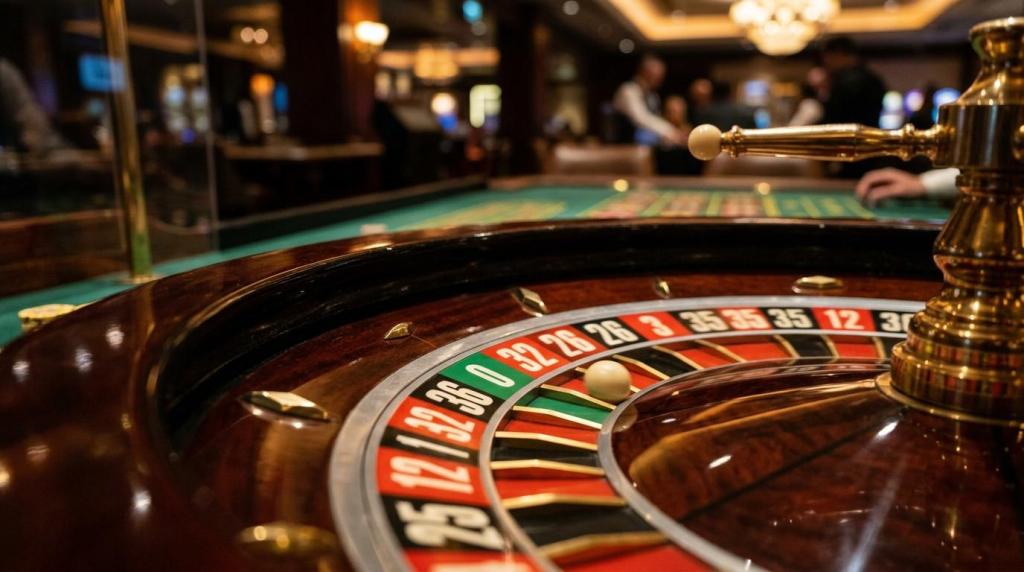
Roulette looks simple from the player’s side. You pick a number, a colour, or a section of the layout, the ball drops, and the table pays according to a familiar schedule. Yet the most important part of the game is not the felt at all. It is the wheel.
A single zero, a double zero, or a live table with special features can change the maths enough to affect your win probability, your expected loss over time, and the type of session you are really signing up for. If you want to compare European, American, and live roulette properly, the first question is not “What does this bet pay?” It is “What wheel am I playing on?”
Why roulette odds and payouts change between wheel types
Most standard roulette bets keep the same listed payout across European and American tables. A straight-up bet still pays 35:1. A split still pays 17:1. Red/black still pays 1:1. That consistency makes roulette feel predictable, but the odds behind those payouts are not identical.
The reason is simple. European roulette has 37 pockets, numbered 1 to 36 plus a single 0. American roulette has 38 pockets, with both 0 and 00. That extra pocket creates one more way for most bets to lose, while the paytable stays the same.
- European roulette: 37 pockets, 2.70% house edge
- American roulette: 38 pockets, 5.26% house edge
- French roulette: 37 pockets, with some even-money bets reduced to a 1.35% edge when La Partage or En Prison applies
That is why experienced players so often favour single-zero tables. The payouts do not get better, but the odds do.
Roulette odds and payouts by bet type
The easiest way to see the difference is to compare common bets side by side.
| Bet Type | Standard Payout | Win Chance in European Roulette | Win Chance in American Roulette |
|---|---|---|---|
| Straight-up (1 number) | 35:1 | 2.70% | 2.63% |
| Split (2 numbers) | 17:1 | 5.41% | 5.26% |
| Street (3 numbers) | 11:1 | 8.11% | 7.89% |
| Corner (4 numbers) | 8:1 | 10.81% | 10.53% |
| Six-line (6 numbers) | 5:1 | 16.22% | 15.79% |
| Dozen (12 numbers) | 2:1 | 32.43% | 31.58% |
| Column (12 numbers) | 2:1 | 32.43% | 31.58% |
| Even-money bets (red/black, odd/even, high/low) | 1:1 | 48.65% | 47.37% |
Those percentage gaps look small at first glance. Over a long session, they matter a great deal. American roulette is not dramatically different spin by spin, but over many wagers the extra zero lifts the casino edge to almost double the European rate.
That single detail does more than any betting pattern ever will.
European roulette odds and house edge
European roulette is the benchmark many players prefer, and with good reason. The single-zero wheel gives every standard bet a better chance than the same bet on an American table. Straight bets remain long shots, outside bets still win often enough to feel steady, and the built-in casino edge stays at 2.70%.
For even-money bets, that difference is especially useful. Red/black, odd/even, and high/low each win 18 times out of 37 possible outcomes, or about 48.65%. That is still not a positive expectation, since the zero breaks the symmetry, though it is far friendlier than the American equivalent.
French roulette deserves a mention here because it uses the same single-zero wheel but sometimes offers stronger rules on even-money bets. When La Partage applies, half of an even-money bet is returned if the ball lands on zero. En Prison works differently, holding the bet for one more spin, yet the effect is similar. On those even-money wagers, the house edge drops to about 1.35%.
After a few sessions, that lower edge is not a subtle detail. It can mean longer play, slower bankroll erosion, and less pressure to chase losses.
- Longer bankroll life
- Lower average cost per spin
- Better value on outside bets
- Strong fit for disciplined, lower-variance play
American roulette odds and payouts
American roulette uses the same familiar betting layout with one critical addition: 00. That pocket is the reason the game’s house edge rises to 5.26%.
The impact is mechanical, not mysterious. A red bet still pays 1:1, but there are now 20 losing outcomes instead of 19. A straight-up bet still pays 35:1, but there are now 37 ways to miss instead of 36. The paytable is unchanged while the wheel becomes less favourable.
This matters even more than many new players expect. If you wager $100 in total over time on European roulette, your average expected loss is about $2.70. On American roulette, it is about $5.26. That difference compounds quickly in longer sessions, higher limits, or any system that increases stake size after losses.
American roulette is still widely recognised, and some players enjoy it out of habit or table availability. From a pure numbers point of view, though, single-zero roulette is the sharper choice nearly every time.
Live roulette odds and payouts on standard tables
Live roulette adds a dealer, a real wheel, a video stream, and a stronger sense of occasion. What it does not automatically add is better value. The maths still comes from the wheel and the rules on the table.
Most live roulette tables online are based on European single-zero rules, which means their payouts and odds match standard European roulette. Some studios also offer American live roulette with the double-zero wheel, and those tables carry the same 5.26% house edge as their non-live equivalents.
That makes live roulette a format choice first, not an odds upgrade. The attraction is the pace, the presentation, and the realism. Many players enjoy having a human dealer and a physical spin to watch. Those are valid reasons to choose live roulette, just not mathematical ones.
Live tables also tend to run slower than RNG roulette. That can be helpful. More time between spins can make it easier to stick to limits, think through bets, and avoid impulsive changes. The same immersive atmosphere can also pull sessions longer than planned, so discipline still matters.
Before joining a live table, check the details rather than the branding.
- Wheel type: single-zero or double-zero
- Table rules: standard rules, La Partage, or En Prison
- Bet limits: make sure the minimum and maximum fit your bankroll
- Bonus features: multipliers or side mechanics can change volatility
Special live roulette variants and multiplier payouts
Some live games keep standard roulette structure but add bonus mechanics. These titles can be entertaining and highly dynamic, though they should not be confused with ordinary roulette odds.
Lightning Roulette is a well-known example. It uses a European-style wheel, but each spin can assign multipliers to a handful of numbers. The trade-off is that ordinary straight-up wins usually pay 29:1 instead of 35:1 unless your number receives a multiplier. The result is a slightly weaker return overall, with an RTP around 97.10%, which means a house edge near 2.90%.
Quantum Roulette takes a similar approach with random multipliers on straight numbers. Its published return is commonly listed around 97.30%, close to standard European roulette. The difference is not in the base wheel alone but in how the bonus feature redistributes value and increases volatility.
Then there are more unusual versions, including Double Ball Roulette. This format uses two balls, so the payout structure changes more noticeably. A straight-up bet may pay one amount if only one ball lands on your number and a bigger amount if both do. The feel is very different from classic roulette, even when the table still looks familiar.
These live variants can be exciting, though they answer a different question. They are built for swingier outcomes and occasional oversized hits, not for cleaner probability.
- Standard live European roulette: Closest match to classic single-zero maths
- Lightning Roulette: Lower base straight-up payout, high multipliers, higher volatility
- Quantum Roulette: Multiplier feature with standard-style single-zero framework
- Double Ball Roulette: Different paytable because two balls create extra result combinations
Roulette strategy, odds, and bankroll choices
No betting system removes the house edge. Martingale, Fibonacci, D’Alembert, Labouchère, and Paroli all change the pattern of wins and losses, but none changes the expected value of the wheel.
That point becomes even more important when comparing European and American roulette. A progression system on a double-zero wheel runs into the same table limits and losing streaks while paying a higher price for every spin. If two players use the same plan, the one on the single-zero wheel starts from a stronger position.
Outside bets are often chosen because they lower variance, not because they are mathematically better. Betting red/black or odd/even produces frequent small results and can suit a calmer session. Inside bets produce larger payouts with lower hit rates. Both categories still carry the table’s built-in edge.
A measured approach tends to look like this: choose single-zero roulette when possible, keep stake size consistent, set a session budget before play starts, and treat live bonus variants as higher-volatility entertainment rather than value plays. That is not glamorous advice, though it is solid.
How to compare roulette tables before you place a bet
A strong roulette choice usually begins with three checks: number of zeros, rule set, and volatility. If the table is European, the base edge is 2.70%. If it is American, it rises to 5.26%. If it is French and La Partage applies to even-money bets, those wagers become much more attractive.
After that, look at what kind of session you want. Standard live European roulette suits players who want familiar payouts and a slower rhythm. American roulette suits players who do not mind paying more for the format or availability. Multiplier games suit players who want more variance and the chance of rare, oversized wins.
Roulette will always be a game of fixed probabilities, but table selection is still one of the few decisions that can materially improve your position. Pick the better wheel first, then let your bet style follow the maths.